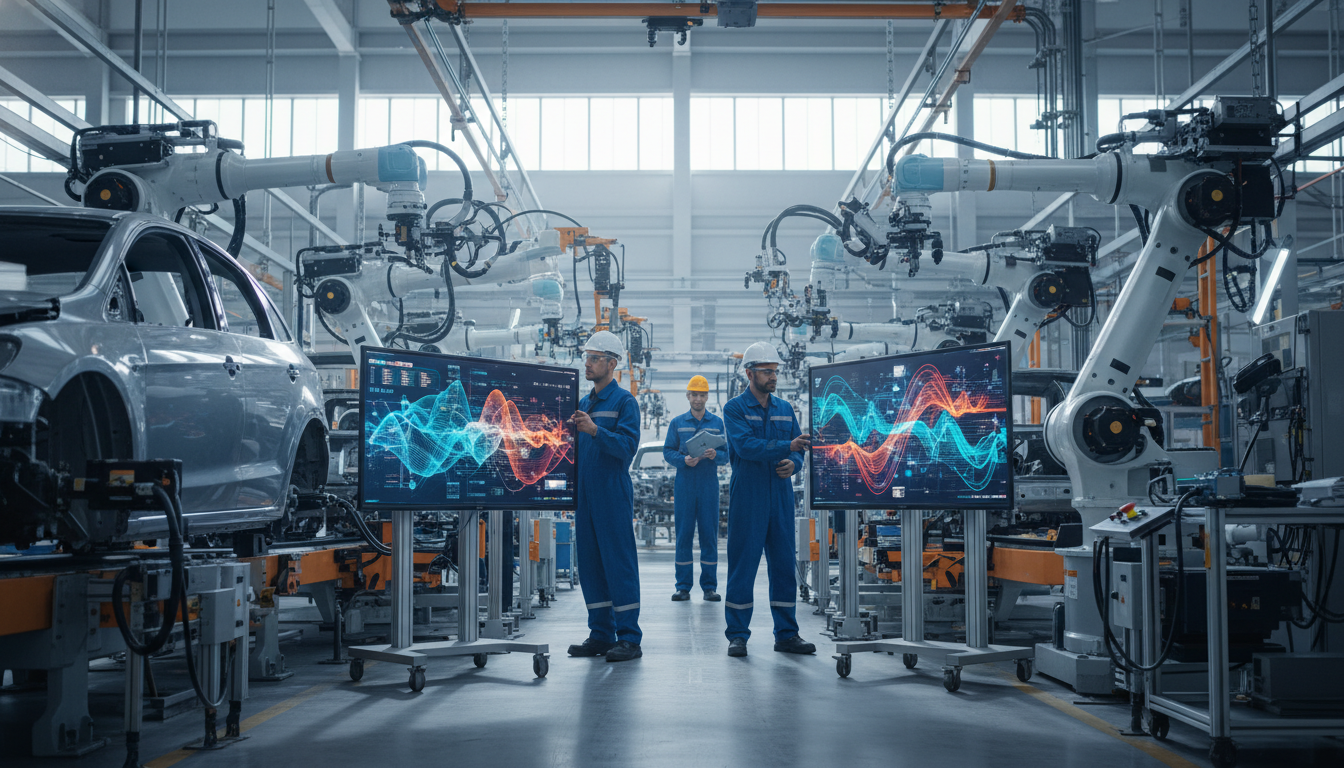
Edge AI in Automotive Manufacturing
Edge AI in Automotive Manufacturing refers to the integration of artificial intelligence technologies at the edge of the network, specifically within manufacturing processes in the automotive sector. This approach enables real-time data processing and decision-making at the source of data generation, enhancing operational efficiency and responsiveness. As automotive manufacturers increasingly prioritize automation and data-driven strategies, Edge AI becomes crucial for optimizing production workflows and fostering innovation. This concept is aligned with the broader AI-led transformation, where organizations seek to leverage advanced technologies to meet evolving customer demands and operational challenges.
The significance of Edge AI within the automotive ecosystem is profound, as it is reshaping how manufacturers approach competitive dynamics and innovation. By implementing AI-driven practices, companies can enhance efficiency and refine decision-making processes, which in turn influences their long-term strategic direction. Moreover, the adoption of Edge AI fosters deeper stakeholder interactions and creates opportunities for collaboration throughout the supply chain. However, challenges such as adoption barriers, integration complexities, and shifting expectations must be addressed to fully realize the potential of this transformative technology. In navigating these dynamics, organizations can capitalize on growth opportunities while remaining vigilant about the hurdles they may face.
Accelerate Edge AI Adoption in Automotive Manufacturing
Automotive manufacturers should strategically invest in Edge AI technologies and forge partnerships with leading AI firms to optimize production processes and enhance vehicle performance. This proactive approach is expected to drive significant operational efficiencies, reduce costs, and create a competitive advantage in a rapidly evolving market.
How Edge AI is Transforming Automotive Manufacturing?
Implementation Framework
Evaluate current AI capabilities and infrastructure
Test edge AI applications in controlled environments
Expand validated AI solutions across operations
Establish metrics for ongoing AI performance
Upskill employees for AI integration
Conduct a thorough assessment of existing AI technologies and infrastructure to ensure readiness for implementation. This step identifies gaps and opportunities, enhancing operational efficiency and aligning with Edge AI objectives.
Industry Standards
Implement pilot projects for selected edge AI applications, allowing real-time testing and validation of strategies. This approach facilitates learning and adaptation, ensuring solutions meet operational needs before full-scale deployment.
Technology Partners
Once pilot projects demonstrate success, scale these AI solutions across the entire manufacturing operation. This strategy amplifies benefits, enhances efficiency, and contributes to greater supply chain resilience .
Cloud Platform
Create a framework for continuously monitoring the performance of deployed AI solutions. This process involves setting metrics and KPIs to ensure alignment with business objectives and operational efficiency over time.
Internal R&D
Develop and implement training programs for employees to effectively utilize AI tools and technologies. This step fosters a culture of innovation and equips the workforce to leverage AI capabilities, enhancing operational performance.
Industry Standards
Best Practices for Automotive Manufacturers
Optimize Real-time Data Processing
- Impact : Enhances predictive maintenance capabilities
Example : Example: An automotive plant uses edge AI to analyze equipment sensor data in real time, predicting failures before they occur, thus reducing unscheduled downtimes and saving thousands in repair costs. - Impact : Reduces unexpected machinery failures
Example : Example: By leveraging real-time data analytics, a manufacturer optimizes machine usage, leading to a 15% increase in production efficiency and a significant reduction in idle time during shifts. - Impact : Improves resource allocation efficiency
Example : Example: An automotive assembly line minimizes waste by using AI to monitor resource usage in real time, ensuring materials are allocated efficiently, resulting in a 20% reduction in excess inventory. - Impact : Increases uptime across production lines
Example : Example: A car manufacturer utilizes edge AI to schedule maintenance based on real-time wear data, significantly increasing machine availability and boosting overall production output.
- Impact : High initial investment for implementation
Example : Example: A leading automotive firm faces delays in AI deployment due to unforeseen costs associated with hardware upgrades and staff training, resulting in missed production targets during peak demand. - Impact : Potential data security vulnerabilities
Example : Example: A factory's edge AI system experiences data breaches, leading to concerns over sensitive operational information being leaked, prompting immediate audits and system redesigns. - Impact : Challenges in staff training
Example : Example: The implementation of edge AI necessitates extensive training for existing staff, proving challenging as workers struggle to adapt to new technologies, leading to temporary drops in productivity. - Impact : Dependence on reliable internet connectivity
Example : Example: An automotive manufacturing facility relies heavily on cloud data for AI operations, but intermittent internet outages disrupt real-time analytics, causing delays in production scheduling .
Implement AI-driven Quality Control
- Impact : Boosts product quality consistency
Example : Example: An automotive manufacturer employs AI-driven quality control to analyze paint finishes, resulting in a 30% decrease in defects and significantly improving customer satisfaction ratings after delivery. - Impact : Reduces human error in inspections
Example : Example: By using AI for real-time defect detection , a car assembly line minimizes human error during inspections, leading to a notable reduction in warranty claims and enhanced brand reputation. - Impact : Enhances customer satisfaction rates
Example : Example: A tire manufacturer implements AI systems that assess product quality during production, which reduces rework costs by 25% and improves overall operational efficiency. - Impact : Cuts costs associated with reworks
Example : Example: AI systems automatically flag non-compliant products on the assembly line, ensuring only high-quality items reach the market, thereby enhancing brand loyalty and customer satisfaction.
- Impact : Integration challenges with legacy systems
Example : Example: A major automotive company struggles with integrating new AI quality control systems with outdated machinery, causing delays and disruptions in the production workflow and resulting in increased costs. - Impact : Potential biases in AI algorithms
Example : Example: Biases in the AI algorithms lead to consistent mislabeling of specific car models as defective, resulting in costly recalls and damage to the brand's reputation. - Impact : High maintenance costs for AI systems
Example : Example: A manufacturer realizes that maintaining AI systems incurs higher costs than anticipated, straining budgets and forcing cutbacks in other operational areas. - Impact : Limited scalability for future growth
Example : Example: As production demands grow, a manufacturer finds that its AI systems cannot scale efficiently, leading to bottlenecks and reduced responsiveness to market changes.
Train Workforce on AI Tools
- Impact : Empowers employees with new skills
Example : Example: A leading automotive manufacturer invests in comprehensive AI training programs, empowering workers with new technological skills, which boosts productivity and morale across the factory floor. - Impact : Fosters a culture of innovation
Example : Example: By fostering a culture of innovation through AI workshops, a car manufacturer enhances employee engagement, resulting in a 15% increase in retention rates over the following year. - Impact : Increases employee retention rates
Example : Example: An automotive firm implements team-based AI training sessions, enhancing collaboration among departments, leading to faster problem-solving and improved project outcomes. - Impact : Enhances teamwork and collaboration
Example : Example: Employees trained on AI tools contribute innovative ideas for process improvements, driving operational excellence and leading to a 20% increase in production efficiency.
- Impact : Resistance to new technology adoption
Example : Example: A major automotive plant faces resistance from employees hesitant to adopt new AI tools, leading to delays in implementation and missed opportunities to enhance production efficiency. - Impact : Potential skill gaps among workers
Example : Example: Some workers struggle to grasp AI concepts during training, creating skill gaps that hinder the overall effectiveness of the technology integration within the production process. - Impact : Increased training costs
Example : Example: The cost of comprehensive AI training programs exceeds initial budgets, forcing management to make difficult decisions regarding resource allocation and project timelines. - Impact : Short-term productivity dips during training
Example : Example: During the transition to AI tools, temporary dips in productivity occur as employees adjust, impacting overall output and leading to financial strain in the short term.
Leverage Edge Computing Solutions
- Impact : Reduces latency in data processing
Example : Example: An automotive manufacturer implements edge computing to process data locally, significantly reducing latency and enabling real-time decision-making on the production floor, which boosts efficiency. - Impact : Enables real-time decision making
Example : Example: By utilizing edge computing, a car assembly line can make instantaneous adjustments based on sensor data, leading to higher quality outputs and reduced error rates. - Impact : Improves system reliability and uptime
Example : Example: An electric vehicle manufacturer experiences improved system reliability with edge solutions, ensuring continuous operation and significantly reducing machine downtimes across production lines. - Impact : Decreases bandwidth costs significantly
Example : Example: A manufacturer saves on bandwidth costs by processing data at the edge, allowing more resources to be allocated toward innovation rather than infrastructure.
- Impact : Complexity in system architecture
Example : Example: A mid-sized automotive firm encounters challenges in managing a complex system architecture, leading to integration issues and delayed AI deployment across production lines. - Impact : Potential vendor lock-in issues
Example : Example: A manufacturer faces vendor lock-in with its edge computing solution, limiting flexibility and increasing costs when considering new technologies or upgrades. - Impact : Challenges in data governance
Example : Example: Inadequate data governance practices lead to inconsistencies in data quality, complicating AI model training and affecting overall production outcomes in an automotive plant. - Impact : Reliance on continuous software updates
Example : Example: Continuous software updates become a bottleneck for an automotive manufacturer, causing temporary downtimes that disrupt production schedules and impact delivery timelines.
Utilize Predictive Analytics
- Impact : Enhances supply chain management
Example : Example: An automotive manufacturer employs predictive analytics to optimize its supply chain, resulting in a 20% reduction in delays and improved delivery times for critical components. - Impact : Improves forecasting accuracy
Example : Example: By leveraging AI for forecasting , a car manufacturer achieves a 95% accuracy rate in production planning, significantly lowering costs associated with overproduction and stockouts. - Impact : Reduces inventory holding costs
Example : Example: A leading automotive firm uses predictive analytics to manage inventory, leading to a reduction in holding costs by 30% and freeing up capital for other investments. - Impact : Enables proactive risk management
Example : Example: Proactive risk management through predictive analytics helps an automotive company anticipate market changes, allowing for timely adjustments in production strategy and improved responsiveness.
- Impact : Over-reliance on data predictions
Example : Example: An automotive company experiences significant production disruptions due to over-reliance on predictive analytics that failed to account for unexpected market shifts, leading to excess inventory. - Impact : Potential inaccuracies in forecasts
Example : Example: Inaccurate forecasts from predictive models result in production halts for an automotive manufacturer, driving up operational costs and straining relationships with suppliers due to unmet demand. - Impact : High costs for data integration
Example : Example: The high costs associated with integrating various data sources for predictive analytics lead to budget overruns, ultimately impacting other critical areas of the business. - Impact : Resistance to change from stakeholders
Example : Example: Stakeholder resistance to adopting predictive analytics slows down decision-making processes, delaying strategic initiatives and reducing the competitive edge of the automotive manufacturer.
Adopt Continuous Improvement Culture
- Impact : Encourages innovation and creativity
Example : Example: An automotive company fosters a continuous improvement culture by encouraging employees to suggest process enhancements, leading to innovative solutions that increase overall productivity by 15%. - Impact : Promotes employee engagement and morale
Example : Example: By promoting employee engagement through feedback channels, a manufacturer boosts morale, resulting in lower turnover rates and a more motivated workforce focused on quality improvement. - Impact : Enhances overall productivity levels
Example : Example: Continuous improvement initiatives enable an automotive manufacturer to adapt quickly to market changes, significantly increasing responsiveness to customer demands and driving sales growth. - Impact : Fosters adaptability to market changes
Example : Example: An automotive assembly line implements regular review sessions, allowing teams to identify inefficiencies and streamline processes, ultimately enhancing overall productivity and reducing costs.
- Impact : Resistance to cultural change
Example : Example: An automotive manufacturer struggles to implement a continuous improvement culture as management hesitates to endorse changes, resulting in stagnant productivity and missed opportunities for process enhancements. - Impact : Lack of management support
Example : Example: Limited participation from employees in improvement initiatives leads to a lack of diverse perspectives, ultimately hindering innovative solutions and slowing progress within the organization. - Impact : Limited employee participation
Example : Example: A focus on immediate results hampers long-term improvement efforts in an automotive plant, creating a cycle of reactive rather than proactive changes that stifle growth and innovation. - Impact : Short-term focus on immediate results
Example : Example: Resistance to cultural change among long-standing employees creates friction that undermines new initiatives aimed at fostering continuous improvement, leading to a lack of momentum.
Edge AI is not just a technological advancement; it's the cornerstone of the next generation of automotive innovation, enabling real-time decision-making and safety.
– Murali Krishna Reddy MandalapuCompliance Case Studies
Seize the opportunity to harness Edge AI and transform your operations. Stay ahead of the competition and drive innovation in the automotive industry today.
Take Test
Leadership Challenges & Opportunities
Legacy System Compatibility
Employ Edge AI in Automotive Manufacturing to create modular architectures that interface with legacy systems. Utilize real-time data processing and APIs to ensure smooth integration, allowing for gradual upgrades. This enhances operational efficiency while preserving existing investments.
Data Security Concerns
Implement Edge AI in Automotive Manufacturing with enhanced encryption and local processing capabilities to protect sensitive data. Establish robust cybersecurity protocols and regular audits to ensure compliance. This approach mitigates risks while enabling secure, real-time data analysis on the production floor.
Change Management Resistance
Utilize Edge AI in Automotive Manufacturing to demonstrate clear benefits through pilot projects that showcase efficiency gains. Foster a culture of innovation by involving employees in the implementation process and providing training. This helps alleviate fears and encourages acceptance of new technologies.
Skill Development Shortage
Address the skills gap in Automotive by integrating Edge AI in Manufacturing training modules into existing programs. Collaborate with educational institutions to provide hands-on experience. This strategy not only builds a more competent workforce but also accelerates the adoption of advanced technologies.
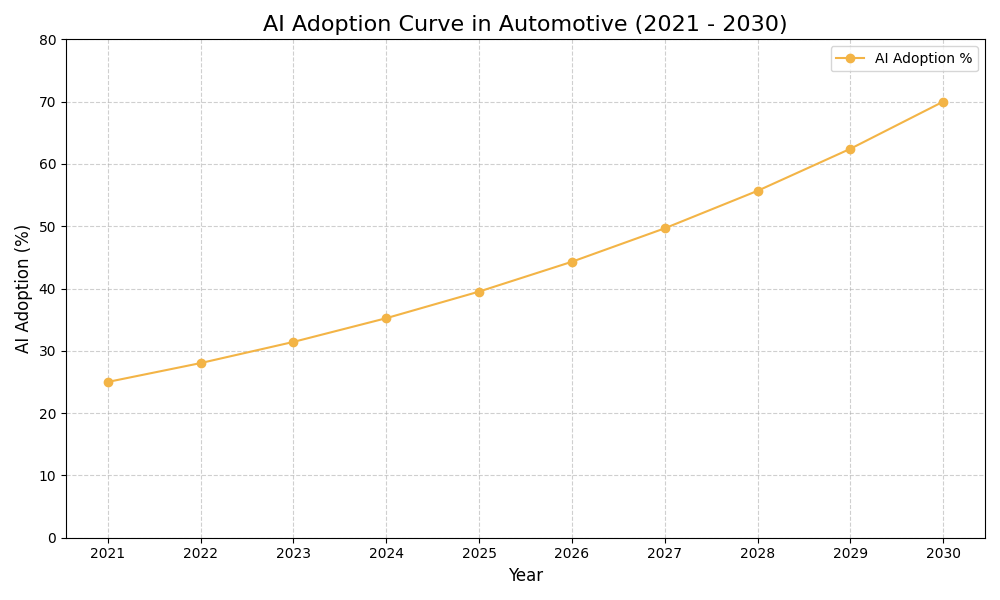
Assess how well your AI initiatives align with your business goals
AI Adoption Graph
AI Use Case vs ROI Timeline
| AI Use Case | Description | Typical ROI Timeline | Expected ROI Impact |
|---|---|---|---|
| Predictive Maintenance | AI algorithms analyze machinery data in real-time to predict failures before they occur. For example, a manufacturing plant uses sensors to monitor equipment, reducing downtime by scheduling maintenance only when needed. | 6-12 months | High |
| Quality Control Automation | Edge AI systems inspect parts for defects during production. For example, a plant employs computer vision to assess the quality of automotive components, catching defects early and reducing waste. | 6-12 months | Medium-High |
| Supply Chain Optimization | AI analyzes supply chain data to optimize inventory and logistics. For example, a manufacturer uses AI to predict demand, ensuring that parts are available when needed without overstocking. | 12-18 months | Medium-High |
| Production Line Efficiency | Real-time data analytics enhance production line efficiency by minimizing bottlenecks. For example, a factory implements AI to adjust workflows dynamically based on real-time output data. | 6-12 months | High |
Glossary
Work with Atomic Loops to architect your AI implementation roadmap — from PoC to enterprise scale.
Contact NowFrequently Asked Questions
- Edge AI in Automotive Manufacturing processes data close to the source for real-time insights.
- It enhances operational efficiency by reducing latency and improving decision-making speed.
- This technology supports automation of routine tasks, freeing up human resources for complex jobs.
- It enables predictive maintenance by analyzing data from machinery to foresee issues.
- Companies can quickly adapt to changes in production demands through agile data management.
- Begin by assessing your current infrastructure and identifying areas for potential AI integration.
- Engage with AI specialists to understand the specific requirements for your operations.
- Pilot projects can provide valuable insights while minimizing initial investment risks.
- Training staff on AI technology is crucial for successful implementation and adoption.
- Establish clear objectives and metrics to evaluate the effectiveness of Edge AI solutions.
- Edge AI improves operational efficiency, leading to cost reductions and increased productivity.
- It enables real-time decision-making, enhancing responsiveness to market changes.
- Companies can gain a competitive edge through faster innovation and product development.
- Data-driven insights lead to improved quality control and reduced waste in manufacturing.
- This technology supports better compliance with industry regulations by ensuring data integrity.
- Integration with legacy systems can pose significant technical challenges during implementation.
- Data privacy and security concerns must be addressed to protect sensitive information.
- There may be resistance from employees due to fear of job displacement or change.
- High initial costs can be a barrier, requiring careful cost-benefit analysis.
- Ongoing maintenance and updates are necessary to keep AI systems functioning optimally.
- Organizations should consider implementation when they are ready to invest in digital transformation.
- Timing should align with the need for improved efficiency and competitive advantage.
- Evaluate market trends and customer demands to determine urgency for adoption.
- A readiness assessment can help identify internal capabilities and gaps before starting.
- Pilot projects can be initiated when the organization is prepared for incremental changes.
- Start with clearly defined goals to guide the implementation process effectively.
- Involve cross-functional teams to ensure diverse perspectives and expertise are included.
- Regularly monitor performance metrics to adapt strategies based on real-time data insights.
- Invest in employee training to facilitate smooth transitions and acceptance of new technologies.
- Establish partnerships with technology providers for ongoing support and expertise.
- Edge AI can streamline supply chain management by optimizing inventory levels in real-time.
- It supports advanced driver-assistance systems (ADAS) for enhanced vehicle safety features.
- Predictive maintenance can reduce equipment downtime through real-time monitoring and analytics.
- Quality control processes benefit from AI-driven visual inspection systems at production lines.
- Automakers can enhance customer experiences through personalized vehicle features and services.
- Establish baseline performance metrics before implementation to track improvements accurately.
- Focus on quantifiable metrics like reduced downtime, cost savings, and increased productivity.
- Conduct regular assessments to evaluate the effectiveness of AI-driven processes.
- Collect feedback from employees to gauge enhancements in workflow and job satisfaction.
- Compare performance against industry benchmarks to determine competitive positioning post-implementation.