AI for Paint Shop Quality Control
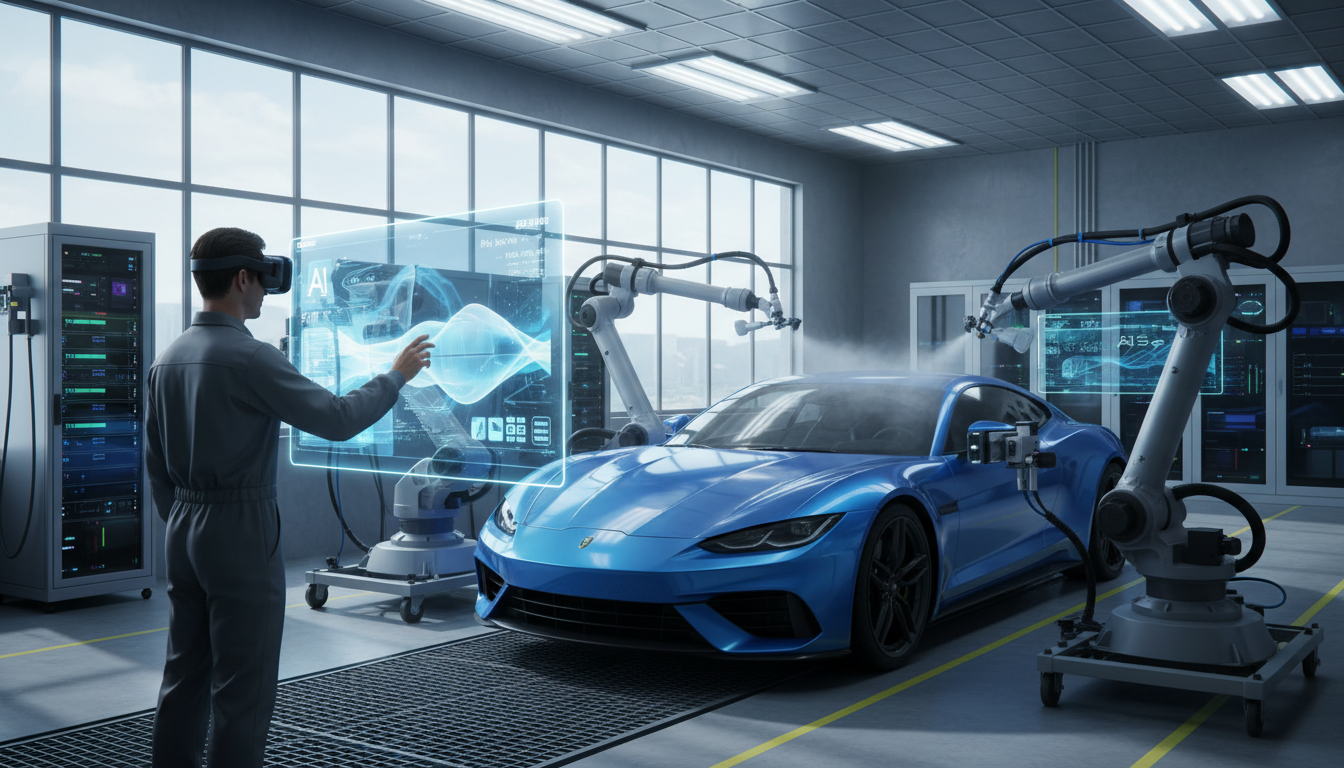
AI for Paint Shop Quality Control represents the integration of artificial intelligence technologies within automotive paint processes to enhance quality assurance. This concept encapsulates the use of machine learning algorithms and computer vision to monitor and analyze paint application, ensuring optimal results and reducing defects. As the automotive sector evolves, this practice aligns with a larger trend of AI-driven operational transformations, where precision and quality are paramount in meeting consumer expectations and regulatory standards.
The significance of AI in the automotive ecosystem is profound, as it redefines competitive landscapes and accelerates innovation cycles. By leveraging AI for quality control , organizations not only enhance operational efficiency but also improve decision-making processes and stakeholder engagement. While the potential for growth is substantial, challenges such as integration complexities and evolving expectations must be navigated carefully. Embracing AI presents opportunities for enhanced product quality and customer satisfaction, but it also requires a strategic approach to address the obstacles in implementation and adaptation.
Transform Quality Control with AI Solutions in Automotive Paint Shops
Automotive companies should strategically invest in AI-driven technologies and forge partnerships with leading AI firms to enhance Paint Shop Quality Control processes. This proactive approach is expected to yield significant improvements in operational efficiency, product quality, and a competitive edge in the market.
How AI is Transforming Quality Control in Automotive Paint Shops?
Implementation Framework
Establish key performance indicators for quality
Deploy AI tools for real-time monitoring
Educate teams on AI tools usage
Continuously evaluate AI performance
Define specific quality metrics such as color accuracy, finish consistency, and defect rates to guide AI implementations, ensuring improvements align with production goals and enhance customer satisfaction significantly.
Internal R&D
Implement AI-driven software that analyzes production data in real-time to identify defects, enabling immediate corrective actions. This integration enhances operational efficiency and quality assurance processes significantly.
Technology Partners
Conduct comprehensive training sessions for staff on using AI-driven tools, fostering an understanding of data analysis and quality assurance. This step boosts employee engagement and operational effectiveness significantly within the paint shop environment.
Industry Standards
Establish a routine for monitoring AI performance and effectiveness against defined quality metrics, making necessary adjustments to algorithms and processes. This ensures ongoing alignment with production goals and quality standards.
Cloud Platform
Best Practices for Automotive Manufacturers
Implement Predictive Maintenance Strategies
- Impact : Reduces unexpected equipment failures
Example : Example: A leading automotive plant uses AI to predict when paint sprayers need servicing, reducing unexpected breakdowns by 30% and maintaining uninterrupted production schedules. - Impact : Extends machinery lifespan significantly
Example : Example: By analyzing data from paint mixing machines, an automotive manufacturer extends equipment lifespan by 20%, leading to lower replacement costs and enhanced budget management. - Impact : Minimizes production disruptions
Example : Example: AI models forecast potential breakdowns in paint ovens, allowing maintenance teams to plan schedules, thus reducing production disruptions by 25% during high-demand periods. - Impact : Improves scheduling efficiency
Example : Example: Implementing AI-driven maintenance alerts improves scheduling efficiency, resulting in a 15% increase in overall production throughput during peak periods.
- Impact : High initial investment for technology
Example : Example: A prominent automotive manufacturer faces budget constraints due to high initial costs for AI-based predictive maintenance technology, delaying implementation and efficiency gains. - Impact : Potential integration issues with legacy systems
Example : Example: A legacy paint line struggles to integrate AI monitoring systems with outdated PLCs, causing increased downtime and frustration for the engineering team. - Impact : Dependence on accurate data inputs
Example : Example: An automotive plant realizes that its AI system relies on accurate data inputs from sensors. Inconsistent data leads to false predictions, resulting in unnecessary maintenance. - Impact : Resistance from workforce to change
Example : Example: Workers resist adopting AI technology due to fears of job displacement, leading to lower morale and slower adoption of innovative maintenance practices.
Utilize Real-time Quality Monitoring
- Impact : Enhances defect detection speed
Example : Example: An automotive paint shop integrates AI cameras to monitor paint application in real time, enhancing defect detection speed and reducing paint defects by 40% during production. - Impact : Increases overall product quality
Example : Example: Real-time AI monitoring of paint thickness ensures consistent quality, resulting in a 25% reduction in rework and scrap rates in an automotive manufacturing facility. - Impact : Reduces rework and waste
Example : Example: By utilizing AI to monitor production quality, an automotive company sees a 30% increase in customer satisfaction due to fewer defects reported after delivery. - Impact : Boosts customer satisfaction rates
Example : Example: Implementing AI-driven monitoring systems allows manufacturers to maintain higher product quality standards, leading to a significant decrease in warranty claims by 20%.
- Impact : High costs of AI technology
Example : Example: An automotive manufacturer finds the cost of implementing AI for real-time quality monitoring significantly exceeds initial budget estimates, causing delays in the project timeline. - Impact : Potential false positives in detection
Example : Example: An AI quality monitoring system generates false positives, flagging acceptable paint jobs as defective, leading to increased rework and confusion among staff. - Impact : Need for continuous system updates
Example : Example: Continuous updates are required for AI algorithms to adapt to new paint types, posing challenges for an automotive company with tight production schedules and limited IT resources. - Impact : Training requirements for staff
Example : Example: Staff training on AI monitoring systems demands significant time and resources, leading to initial production slowdowns as employees adapt to new technology.
Train Workforce on AI Systems
- Impact : Enhances employee technology confidence
Example : Example: A paint shop provides comprehensive AI training for workers , significantly enhancing their confidence and resulting in a 35% increase in efficient system utilization during production. - Impact : Improves system utilization and efficiency
Example : Example: By offering regular training sessions, an automotive manufacturer ensures employees effectively use AI tools, leading to a 20% reduction in operational errors during quality checks. - Impact : Facilitates smoother AI integration
Example : Example: Training programs help staff embrace AI systems, facilitating smoother integration of new technologies and improving overall workflow efficiency by 15%. - Impact : Reduces operational errors significantly
Example : Example: Employee workshops on AI applications in paint quality control reduce miscommunication, leading to a 25% decrease in operational errors during production.
- Impact : Initial resistance to new technology
Example : Example: Employees at an automotive paint shop resist using new AI systems due to fears of obsolescence, slowing down the adoption rate and impacting productivity. - Impact : Need for ongoing training programs
Example : Example: A manufacturer discovers that ongoing training is necessary to keep employees updated on AI advancements, creating additional costs and logistical challenges for management. - Impact : Potential skill gaps in workforce
Example : Example: A skills gap emerges in the workforce as new AI tools are introduced, leading to decreased productivity until targeted training programs are implemented. - Impact : Costs associated with training initiatives
Example : Example: The costs associated with training employees on new AI systems strain the budget, causing delays in implementation and limiting the full utilization of AI capabilities.
Adopt Continuous Improvement Culture
- Impact : Encourages innovation and agility
Example : Example: An automotive paint shop adopts a continuous improvement culture, encouraging employees to suggest AI enhancements that lead to innovative solutions and a 30% increase in process efficiency. - Impact : Fosters employee engagement and ownership
Example : Example: Fostering a culture of continuous improvement empowers employees, leading to a 25% increase in engagement and ownership of AI technologies in the paint shop. - Impact : Enhances long-term performance metrics
Example : Example: An automotive manufacturer regularly reviews AI performance metrics, identifying inefficiencies and implementing changes that enhance overall long-term performance by 20%. - Impact : Reduces operational inefficiencies
Example : Example: Continuous improvement initiatives help reduce operational inefficiencies, resulting in a 15% decrease in paint application errors and increased production speed.
- Impact : Resistance to cultural changes
Example : Example: Employees resist adopting a continuous improvement culture due to entrenched habits, hindering the successful implementation of AI technologies in the paint shop. - Impact : Potential disconnect with leadership vision
Example : Example: A disconnect arises between leadership's vision for continuous improvement and employees' understanding, leading to ineffective AI usage and disillusionment among teams. - Impact : Short-term focus overshadowing long-term goals
Example : Example: A short-term focus on immediate results overshadows long-term goals for AI integration , causing setbacks in achieving desired operational efficiency. - Impact : Inconsistent implementation across teams
Example : Example: Inconsistent implementation of continuous improvement practices across teams leads to fragmented AI applications, reducing overall effectiveness and accountability in the paint shop.
Integrate Advanced Data Analytics
- Impact : Enhances decision-making capabilities
Example : Example: An automotive manufacturer integrates AI-driven data analytics tools, significantly enhancing decision-making capabilities, leading to a 30% improvement in operational outcomes. - Impact : Increases operational transparency
Example : Example: Advanced data analytics provides real-time insights into paint shop operations , increasing transparency and allowing managers to make informed decisions quickly. - Impact : Identifies trends for continuous improvement
Example : Example: By analyzing production data trends, an automotive paint facility identifies inefficiencies, leading to targeted improvements that enhance overall throughput by 25%. - Impact : Supports strategic planning initiatives
Example : Example: Data analytics supports strategic planning initiatives, allowing the paint shop to forecast future production needs accurately and adjust resources efficiently.
- Impact : Complexity of data integration
Example : Example: An automotive manufacturer struggles with the complexity of integrating diverse data sources for AI analytics, resulting in delays and increased costs during implementation. - Impact : Need for skilled data analysts
Example : Example: The need for skilled data analysts becomes apparent as an automotive paint shop implements AI analytics, hindering progress due to a shortage of qualified personnel. - Impact : Potential for data silos
Example : Example: Data silos emerge within the organization, limiting access to critical information needed for AI-driven analytics and decision-making processes. - Impact : Inconsistent data quality issues
Example : Example: Inconsistent data quality issues lead to unreliable insights from AI analytics tools, causing confusion and misalignment in operational goals within the paint shop.
Leverage AI for Process Optimization
- Impact : Maximizes resource utilization
Example : Example: An automotive paint shop leverages AI algorithms to optimize resource allocation, maximizing utilization of materials and reducing costs by 20% during production. - Impact : Enhances production workflow efficiency
Example : Example: AI-driven process optimization enhances production workflow efficiency, resulting in a 30% reduction in cycle times for paint application processes. - Impact : Reduces cycle time significantly
Example : Example: By utilizing AI for process optimization, an automotive manufacturer reduces overall cycle time by 25%, significantly improving delivery schedules and customer satisfaction. - Impact : Supports cost-effective operations
Example : Example: Cost-effective operations are supported as AI identifies areas for resource savings, leading to a 15% decrease in overall production expenses in the paint shop.
- Impact : Dependence on accurate AI models
Example : Example: An automotive paint shop's operations suffer when an AI model fails to accurately predict optimal paint flow rates, leading to increased waste and operational delays. - Impact : Challenges in real-time data access
Example : Example: Real-time data access issues hinder the AI system's effectiveness, causing delays in process optimization and impacting overall production efficiency. - Impact : Need for constant model updates
Example : Example: A need for constant updates to AI models emerges as paint formulas change, leading to challenges in maintaining optimal performance and necessitating ongoing resources. - Impact : Over-reliance on technology
Example : Example: Over-reliance on AI technology leads to complacency among staff in monitoring processes, resulting in missed human checks and potential quality issues in paint applications.
AI is revolutionizing quality control in paint shops, ensuring precision and consistency that were previously unattainable.
– Alexander HaiberCompliance Case Studies
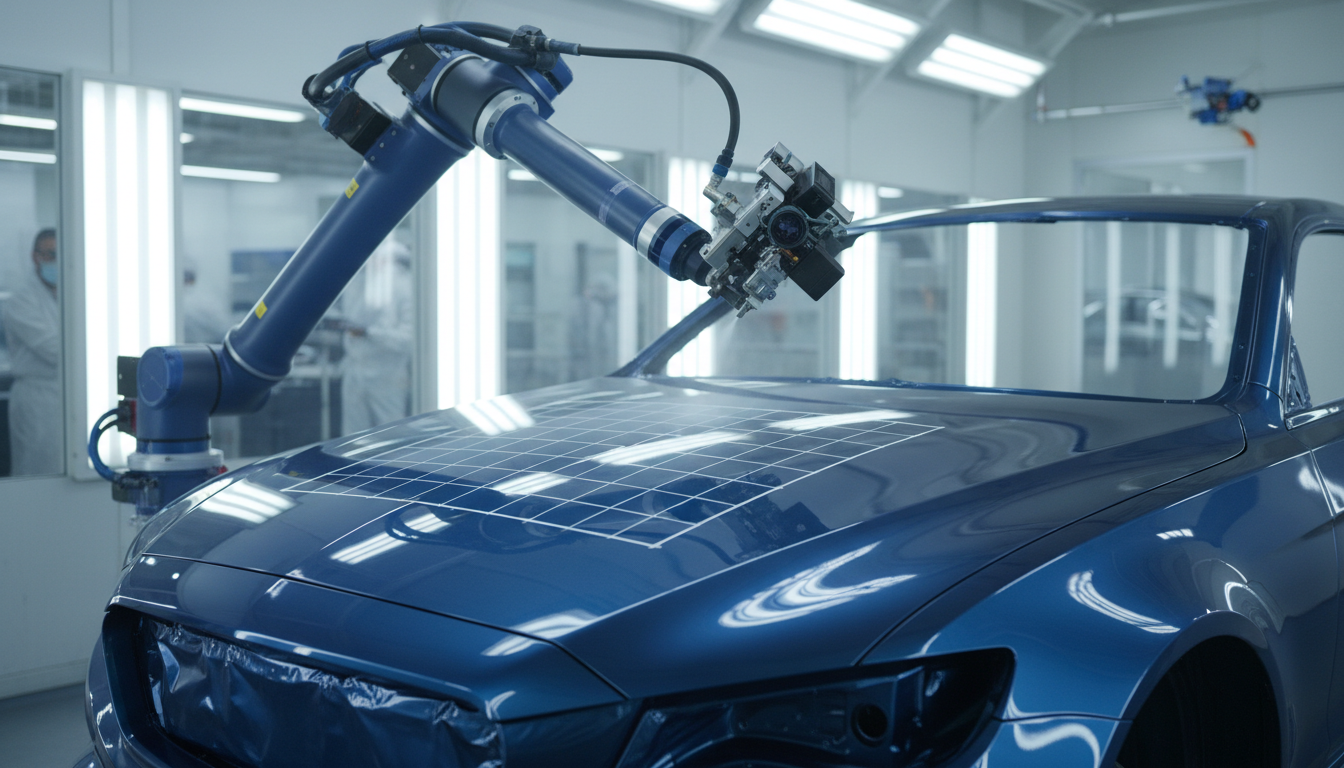
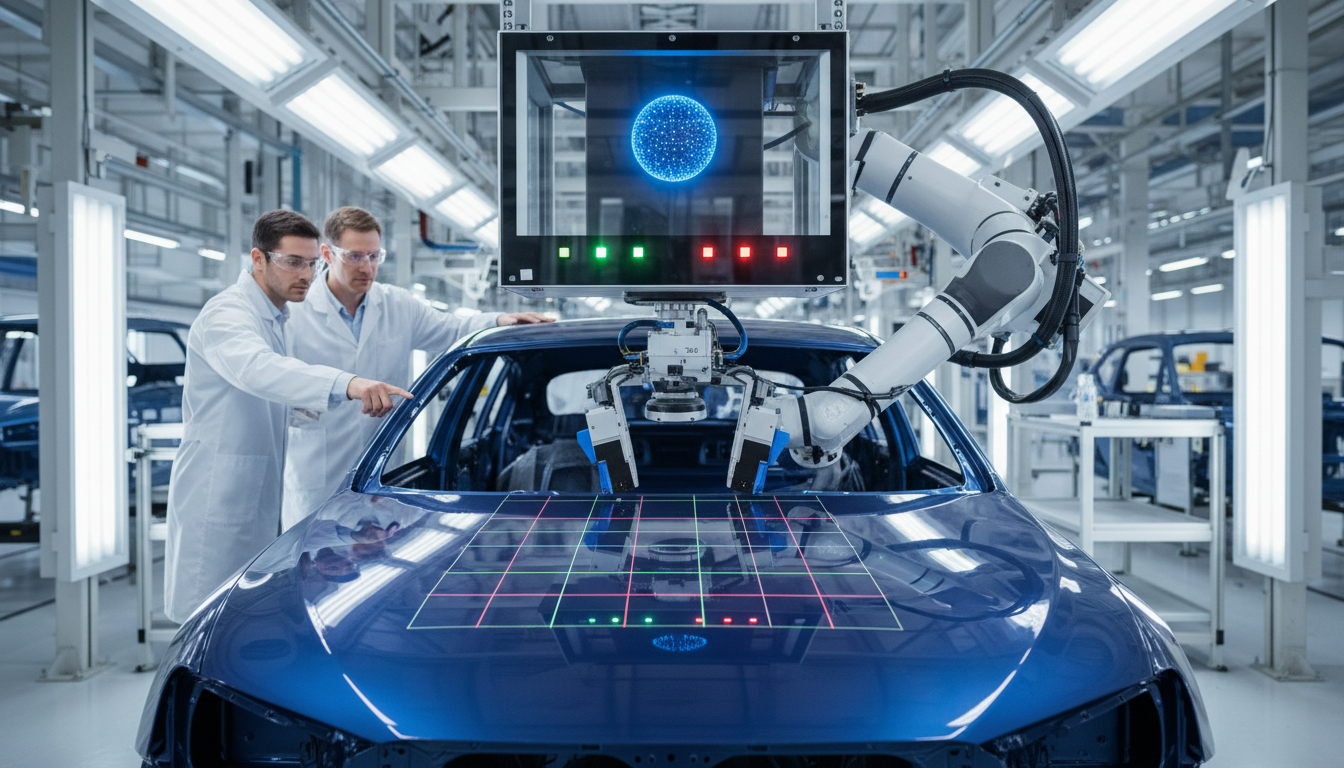
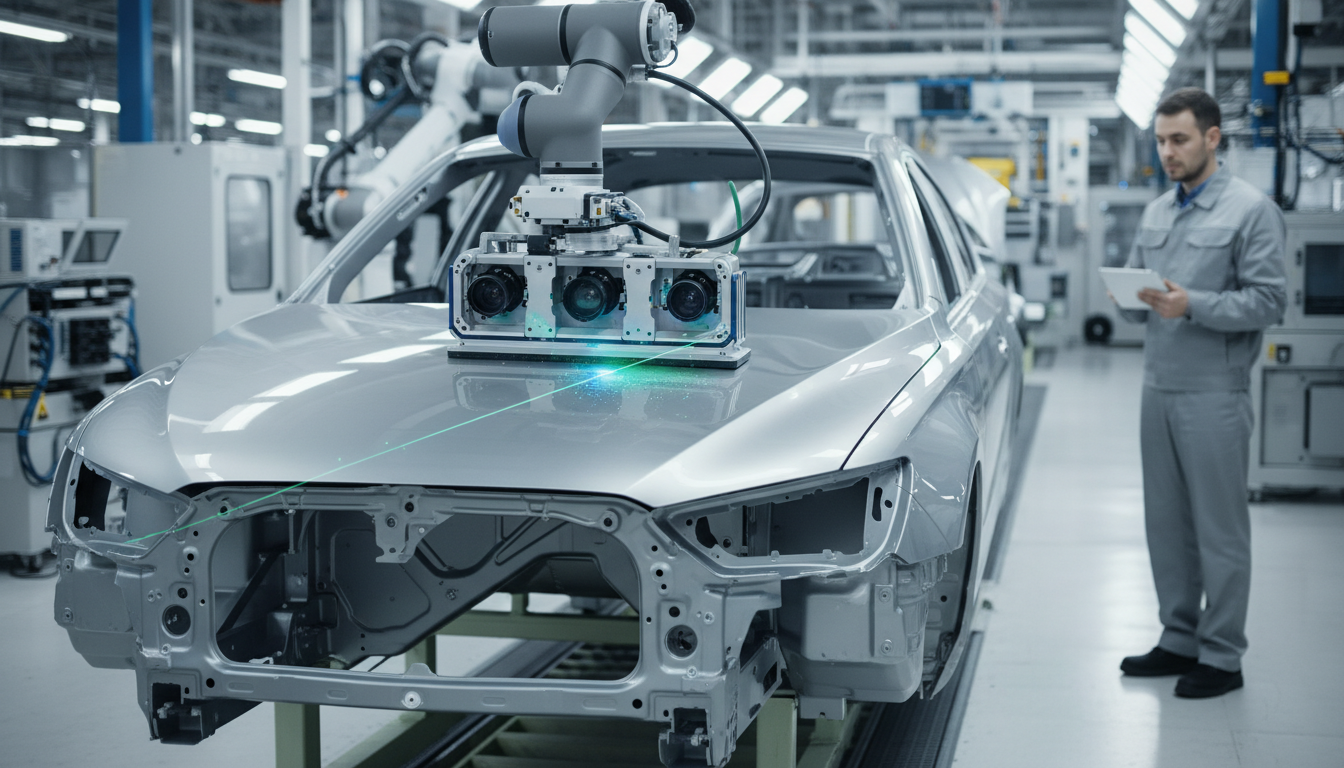
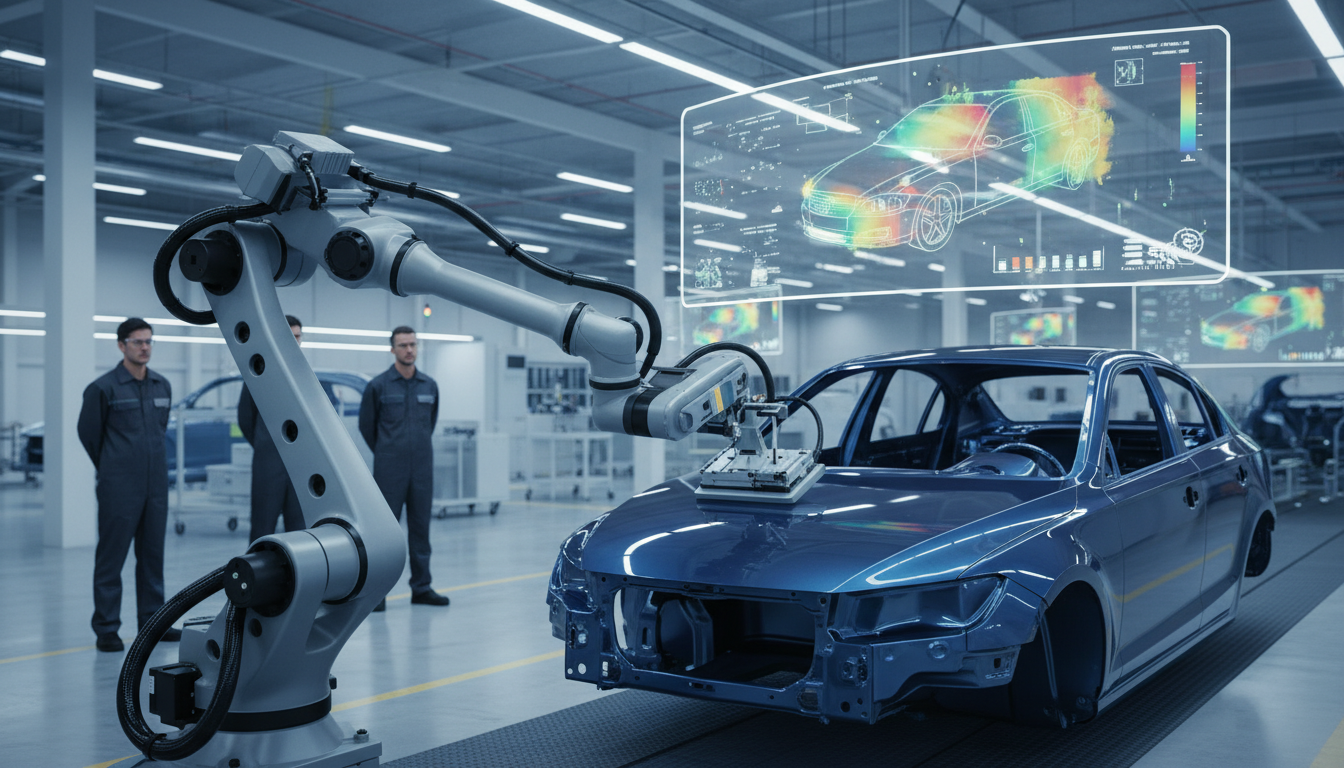
Embrace AI-driven solutions to enhance your paint shop’s quality. Stay ahead of competitors and achieve unmatched standards in automotive excellence today!
Take Test
Leadership Challenges & Opportunities
Data Quality Issues
Utilize AI for Paint Shop Quality Control to implement advanced data validation and cleansing algorithms. These tools ensure high-quality data input, enabling accurate defect detection and analysis. Improved data integrity leads to better decision-making and enhances overall paint quality consistency across automotive production.
Change Resistance
Address change resistance in adopting AI for Paint Shop Quality Control by fostering a culture of innovation through workshops and pilot programs. Engage employees in the transition process, showcasing AI’s benefits through real-world success stories. This inclusive approach promotes acceptance and enthusiasm for new technologies.
High Initial Investment
Mitigate high initial investment in AI for Paint Shop Quality Control by utilizing a phased implementation strategy. Start with low-cost, high-impact pilot projects that showcase ROI. Use these results to justify further investment, allowing for gradual scaling without overwhelming financial burdens on the organization.
Regulatory Compliance Risks
Implement AI for Paint Shop Quality Control with built-in regulatory compliance monitoring tools. These tools automate compliance checks and offer real-time reporting, ensuring adherence to automotive industry standards. By proactively managing compliance risks, manufacturers can avoid fines and maintain operational integrity.
Assess how well your AI initiatives align with your business goals
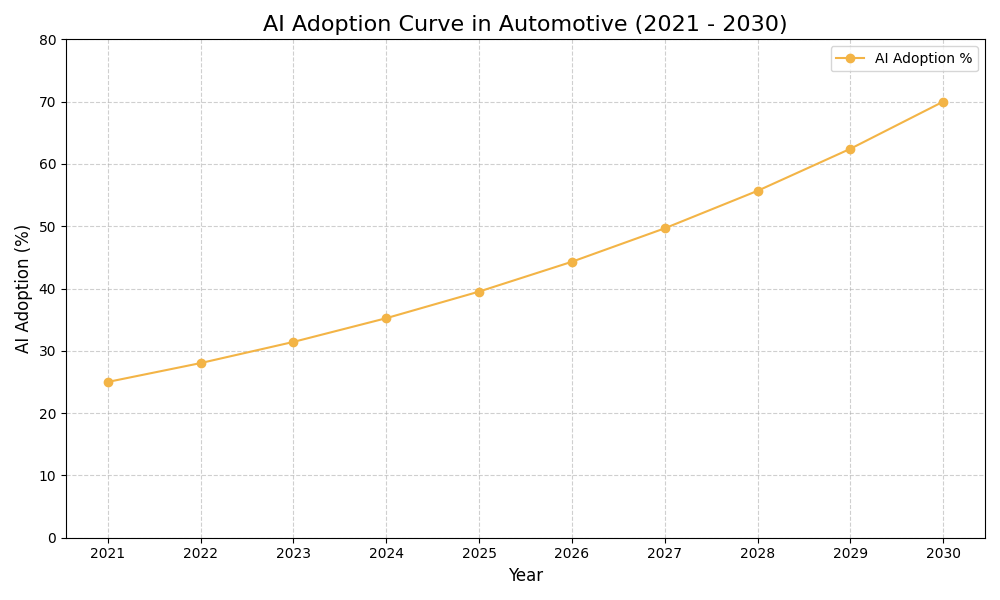
AI Adoption Graph
AI Use Case vs ROI Timeline
| AI Use Case | Description | Typical ROI Timeline | Expected ROI Impact |
|---|---|---|---|
| Automated Defect Detection | AI algorithms analyze paint surfaces for defects, ensuring quality control. For example, using image recognition, a paint shop can instantly identify scratches or uneven coatings during production, reducing rework time and improving product quality. | 6-12 months | High |
| Predictive Maintenance Scheduling | AI predicts when equipment needs maintenance to prevent breakdowns. For example, a paint shop uses historical data and machine learning models to schedule maintenance, reducing downtime and ensuring continuous production flow. | 12-18 months | Medium-High |
| Color Matching Automation | AI assists in achieving precise color matching for paint jobs. For example, using AI-driven spectrophotometers, a paint shop can ensure each batch matches the required color specifications, minimizing customer complaints and returns. | 6-9 months | High |
| Supply Chain Optimization | AI analyzes supply chain variables to optimize inventory levels. For example, a paint shop can utilize AI to predict raw material needs based on production schedules, reducing excess inventory and lowering costs. | 12-18 months | Medium-High |
Glossary
Work with Atomic Loops to architect your AI implementation roadmap — from PoC to enterprise scale.
Contact NowFrequently Asked Questions
- AI for Paint Shop Quality Control automates inspection processes for consistency and quality.
- It reduces human error by employing advanced machine learning algorithms.
- Real-time data analysis enables immediate corrective actions and adjustments.
- This technology enhances the overall aesthetic quality of automotive finishes.
- Companies can expect improved customer satisfaction and brand loyalty through better quality.
- Begin with a needs assessment to identify specific quality control challenges.
- Choose a pilot project to test AI implementation on a smaller scale.
- Collaborate with technology partners for integration with existing systems.
- Allocate resources for training staff on new AI tools and processes.
- Monitor progress and iterate based on feedback to enhance effectiveness.
- AI significantly reduces defect rates by automating quality inspections.
- Companies see improved operational efficiency and reduced labor costs.
- Data-driven insights lead to quicker decision-making and problem resolution.
- Enhanced customer satisfaction results in increased repeat business and referrals.
- AI-driven quality control provides a competitive edge in the automotive market.
- Resistance to change from staff can slow down implementation efforts.
- Data quality issues may hinder the effectiveness of AI algorithms.
- Integration with legacy systems presents technical challenges that require planning.
- Budget constraints can limit the scope of AI initiatives and training.
- Developing a culture of continuous improvement is essential for long-term success.
- Implement AI when your organization is prepared for digital transformation initiatives.
- A clear understanding of current quality control pain points is crucial before starting.
- Timing aligns well with periods of operational review and process optimization.
- Consider market competition and customer demand as motivating factors.
- Early adopter advantages can lead to sustained competitive benefits in quality.
- Stay informed about industry standards regarding product quality and safety.
- Ensure AI solutions comply with environmental regulations related to emissions.
- Adopt practices that align with global automotive compliance standards.
- Regular audits are necessary to validate adherence to regulatory frameworks.
- Documentation of AI processes is essential for transparency and accountability.
- Benchmark against leaders in the automotive sector who have successfully adopted AI.
- Evaluate performance metrics such as defect rates and customer satisfaction scores.
- Adopt best practices from early AI adopters for process efficiency.
- Stay updated on technological advancements to remain competitive.
- Continuous improvement initiatives should align with evolving industry standards.
- AI enhances operational efficiency, reducing time spent on manual inspections.
- It improves the accuracy of quality assessments, minimizing costly errors.
- Organizations benefit from data analytics that inform strategic decisions.
- Competitive advantages arise from superior product quality and faster turnaround.
- Investing in AI fosters innovation, ensuring relevance in a rapidly evolving market.