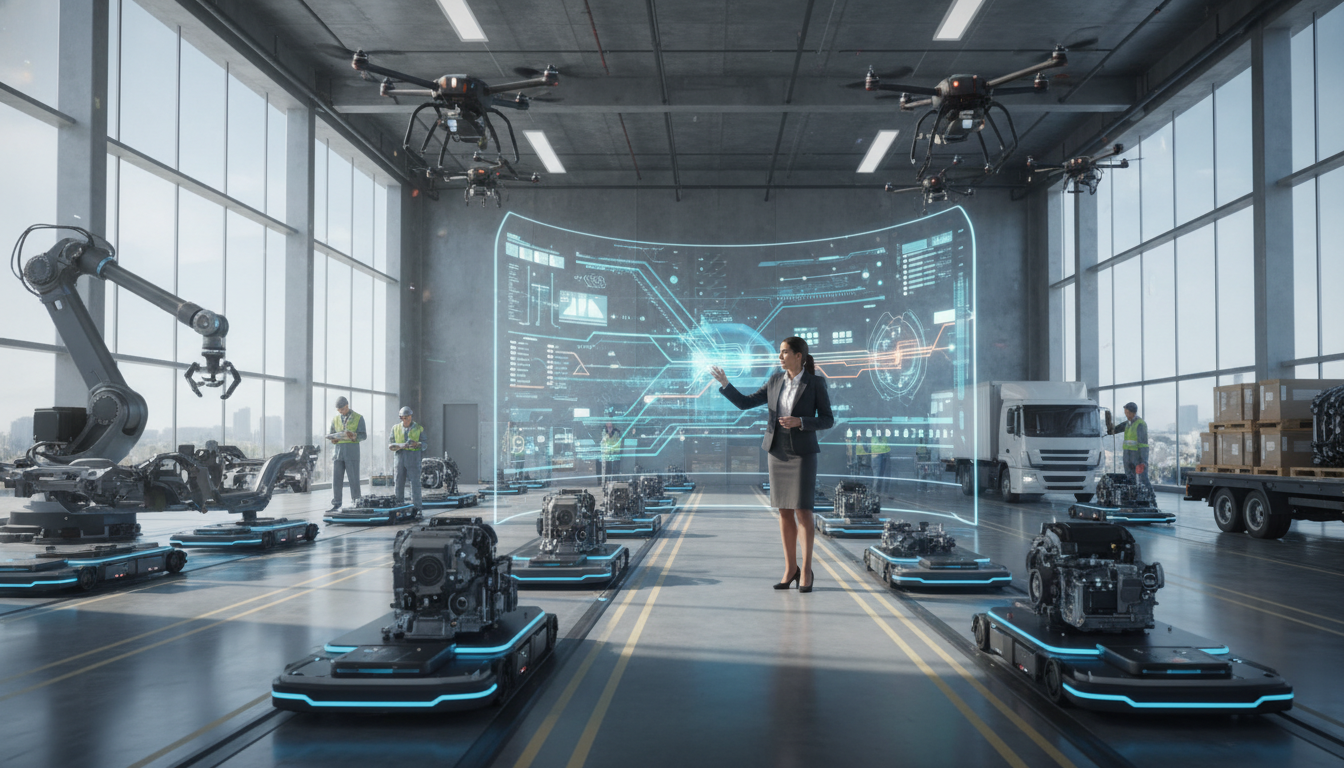
AI for Logistics in Automotive Industry
AI for Logistics in the Automotive Industry refers to the application of artificial intelligence technologies to enhance the efficiency and effectiveness of logistics operations within the automotive sector. This encompasses a range of practices, from optimizing supply chain processes to improving inventory management and enhancing delivery systems. As stakeholders grapple with the complexities of modern logistics, AI serves as a critical tool for driving innovation and aligning with the broader trends of digital transformation and operational excellence.
The significance of AI-driven logistics practices extends beyond mere operational enhancements; it fundamentally reshapes how companies engage with their supply chains, compete in the marketplace, and innovate. By leveraging AI, businesses can improve decision-making processes and operational efficiency, which in turn influences their long-term strategic direction. However, the journey to successful AI adoption is not without challenges, such as integration complexities and evolving stakeholder expectations. Navigating these hurdles while capitalizing on growth opportunities will be crucial for companies aiming to thrive in this transformative landscape.
Accelerate AI Adoption in Automotive Logistics
Automotive companies should strategically invest in AI-driven logistics solutions and form partnerships with leading technology providers to enhance operational efficiency. By leveraging AI, businesses can expect significant improvements in supply chain visibility, cost reduction, and customer satisfaction, creating a competitive edge in the market.
How AI is Revolutionizing Logistics in the Automotive Sector
Implementation Framework
Evaluate existing data systems and processes
Deploy AI tools for logistics optimization
Educate staff on AI technologies
Continuously assess AI performance
Expand proven AI applications
Conduct a thorough assessment of data infrastructure to identify gaps in data collection, storage, and management. This ensures readiness for AI integration, enhancing decision-making and operational efficiency in logistics operations.
Gartner Research
Integrate AI-driven analytics tools into logistics operations to optimize routing, inventory management , and demand forecasting . This enhances efficiency, reduces costs, and improves service delivery in the automotive supply chain .
McKinsey & Company
Provide comprehensive training for staff on AI technologies and systems. This empowers employees to leverage AI effectively, improving productivity and operational excellence while fostering a culture of innovation within the organization.
Harvard Business Review
Establish metrics and KPIs to monitor AI performance continuously. Regularly assess outputs and optimize algorithms to ensure alignment with operational goals, enhancing resilience and adaptability in logistics processes.
Forrester Research
Identify successful AI initiatives and develop strategies for scaling them across the organization. This maximizes the benefits of AI, driving efficiency and innovation across logistics operations in the automotive sector.
Accenture
Best Practices for Automotive Manufacturers
Optimize Supply Chain Automation
- Impact : Enhances inventory management accuracy
Example : Example: A leading automotive manufacturer utilizes AI to predict inventory needs based on historical data, resulting in a 30% reduction in overstock items and improved cash flow. - Impact : Reduces lead times significantly
Example : Example: By implementing AI algorithms for demand forecasting , a logistics company decreases lead times by 20%, enabling faster order fulfillment during peak seasons. - Impact : Improves responsiveness to market demand
Example : Example: An automotive parts supplier uses AI to analyze real-time market trends, allowing them to adjust production schedules swiftly and meet fluctuating customer demands. - Impact : Lowers operational costs effectively
Example : Example: AI-driven route optimization for delivery trucks reduces fuel costs by 15%, showcasing substantial savings across the supply chain.
- Impact : High initial investment for technology
Example : Example: An automotive startup halts its AI implementation after realizing the extensive costs for AI software and hardware exceeded their initial budget, leading to strategic reevaluation. - Impact : Difficulty in data integration
Example : Example: A global automotive firm struggles to integrate AI with legacy systems, causing project delays and additional costs due to unexpected compatibility issues. - Impact : Resistance from workforce adaptation
Example : Example: Despite training programs, employees resist using AI tools, causing a drop in productivity as traditional methods remain in use, delaying operational improvements. - Impact : Reliability on external data sources
Example : Example: An automotive logistics firm experiences setbacks when relying on third-party data providers, whose inconsistent data quality hampers AI decision-making processes.
Leverage Predictive Maintenance
- Impact : Minimizes unexpected equipment failures
Example : Example: A major automotive manufacturer implements predictive maintenance using AI to analyze equipment data, reducing unexpected machine failures by 40% and improving overall productivity. - Impact : Extends machinery lifespan significantly
Example : Example: An AI system predicts wear and tear on assembly robots , allowing maintenance teams to replace parts proactively, extending the machinery's lifespan by an average of two years. - Impact : Reduces maintenance costs over time
Example : Example: By using AI analytics, a logistics provider discovers patterns in equipment failures, enabling targeted maintenance that ultimately decreases costs by 25% annually. - Impact : Enhances production uptime and efficiency
Example : Example: Predictive maintenance strategies lead to a 15% increase in production uptime in an automotive plant, significantly enhancing operational efficiency.
- Impact : Dependence on accurate data inputs
Example : Example: A predictive maintenance system fails due to erroneous sensor data, resulting in unplanned downtime and costly repairs, highlighting the need for accurate inputs in AI systems. - Impact : Potential for technological obsolescence
Example : Example: An automotive company faces rapid technological changes, leading to concerns about their AI system becoming obsolete within a few years, prompting a reassessment of their investment strategy. - Impact : High costs of continuous monitoring
Example : Example: Continuous monitoring systems require significant financial resources; a logistics firm halts its predictive maintenance program due to ongoing expenses exceeding budget limits. - Impact : Challenges in change management
Example : Example: Employees resist adopting new AI tools for predictive maintenance , resulting in poor implementation and decreased overall effectiveness, demonstrating challenges in change management.
Enhance Route Optimization
- Impact : Reduces fuel consumption dramatically
Example : Example: An automotive logistics company implements AI for route optimization, leading to a 15% reduction in fuel costs and improved delivery times, enhancing overall operational efficiency. - Impact : Improves delivery time reliability
Example : Example: By using AI-driven algorithms, a delivery service increases on-time deliveries by 25%, resulting in higher customer satisfaction and repeat business in the automotive sector. - Impact : Increases customer satisfaction rates
Example : Example: AI analyzes traffic patterns and adjusts delivery routes in real-time, increasing fleet utilization rates by 30%, allowing for higher profit margins. - Impact : Maximizes fleet utilization effectively
Example : Example: A logistics firm enhances customer satisfaction through precise delivery scheduling enabled by AI, which leads to a measurable increase in positive feedback from clients.
- Impact : Potential software integration issues
Example : Example: An automotive company struggles with software integration between its AI route optimizer and existing logistics platforms, causing delays in implementation and increased costs. - Impact : Challenges in real-time data access
Example : Example: A logistics provider fails to access real-time traffic data during peak hours, leading to inefficient routing and higher operational costs, highlighting the need for reliable data sources. - Impact : Dependence on external traffic data
Example : Example: Relying heavily on external traffic data, a logistics firm faces challenges when data providers experience outages, resulting in delivery delays and dissatisfied customers. - Impact : Unforeseen operational disruptions
Example : Example: Unexpected road construction disrupts AI-optimized routes, demonstrating the need for flexibility and contingency planning in logistics operations.
Implement AI for Demand Forecasting
- Impact : Enhances accuracy of sales predictions
Example : Example: An automotive company leverages AI for demand forecasting , improving accuracy by 30%, allowing for better alignment between production and market needs, leading to increased profitability. - Impact : Improves inventory turnover rates
Example : Example: By utilizing AI analytics, a logistics provider reduces excess inventory by 20%, enabling quicker turnover rates and less waste from unsold parts, benefiting cash flow. - Impact : Reduces waste from overproduction
Example : Example: Accurate demand predictions through AI lead to a 15% reduction in overproduction, showcasing a significant decrease in waste and increased sustainability efforts in manufacturing . - Impact : Increases agility in production planning
Example : Example: An automotive manufacturer improves agility in production planning, responding to market shifts effectively using AI forecasts, resulting in a notable increase in market responsiveness.
- Impact : Data quality can impact forecasting
Example : Example: An automotive manufacturer faces challenges as poor data quality leads to inaccurate demand forecasts, resulting in stock shortages and production delays, highlighting the need for reliable inputs. - Impact : High dependency on historical data
Example : Example: A logistics firm struggles with its AI model due to heavy reliance on outdated historical data, leading to ineffective forecasting and a mismatch between supply and demand. - Impact : Potential for model inaccuracies
Example : Example: An automotive company discovers inaccuracies in its AI demand forecasting model , resulting in missed opportunities and lost sales, emphasizing the need for continuous model evaluation. - Impact : Challenges in cross-department collaboration
Example : Example: Collaboration between departments becomes challenging during the implementation of AI forecasting tools, causing delays and misalignment in strategy execution.
Utilize AI-driven Quality Control
- Impact : Increases inspection speed significantly
Example : Example: An automotive assembly line introduces AI-driven quality control, increasing inspection speed by 50%, allowing for higher throughput without sacrificing quality during peak production times. - Impact : Enhances defect detection accuracy
Example : Example: AI quality inspection systems detect defects with 95% accuracy, catching flaws that human inspectors often miss, significantly improving product quality in the automotive sector. - Impact : Reduces manual inspection labor costs
Example : Example: By deploying AI for quality checks, a company reduces manual inspection labor costs by 30%, reallocating resources to other critical areas of production, enhancing efficiency. - Impact : Improves overall product quality standards
Example : Example: An automotive manufacturer improves overall product quality standards through AI-driven inspections, resulting in fewer customer complaints and increased brand loyalty.
- Impact : Dependence on technology for quality checks
Example : Example: An automotive company faces production delays when its AI quality control system incorrectly flags non-defective items as flaws, highlighting the need for effective calibration and oversight. - Impact : Potential for false positives in inspections
Example : Example: A firm depends solely on AI inspections ; however, false positives lead to increased waste and reduced efficiency until the system's parameters are refined, demonstrating the importance of human oversight. - Impact : High initial setup costs
Example : Example: Initial setup costs for AI-driven quality control systems exceed budget expectations, causing financial strain and pushing back implementation timelines. - Impact : Resistance to new quality control methods
Example : Example: Employees resist transitioning to AI-driven quality checks, leading to inconsistencies in quality assurance practices and delaying overall improvements in product quality.
AI is revolutionizing logistics in the automotive industry, enabling unprecedented efficiency and adaptability in supply chains.
– Internal R&DCompliance Case Studies

Experience the transformative power of AI solutions in automotive logistics. Stay ahead of the competition and unlock operational efficiencies that drive success today.
Take Test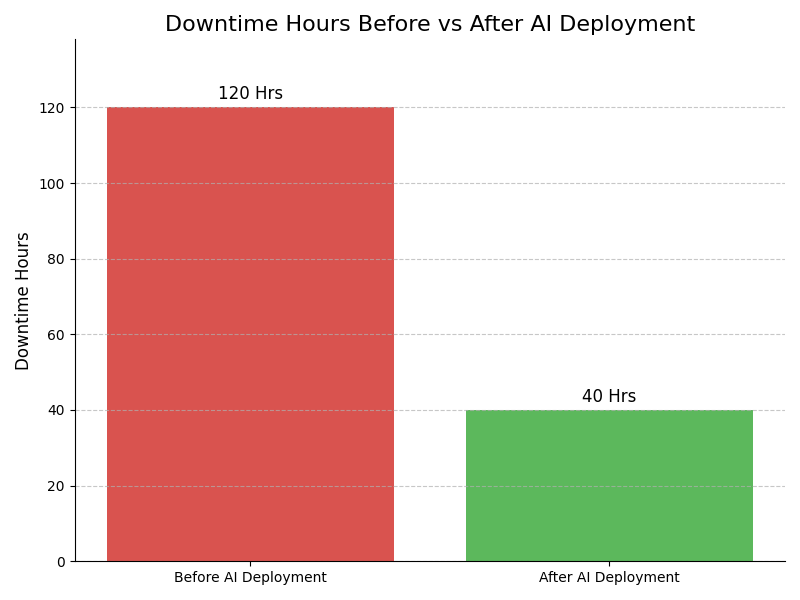
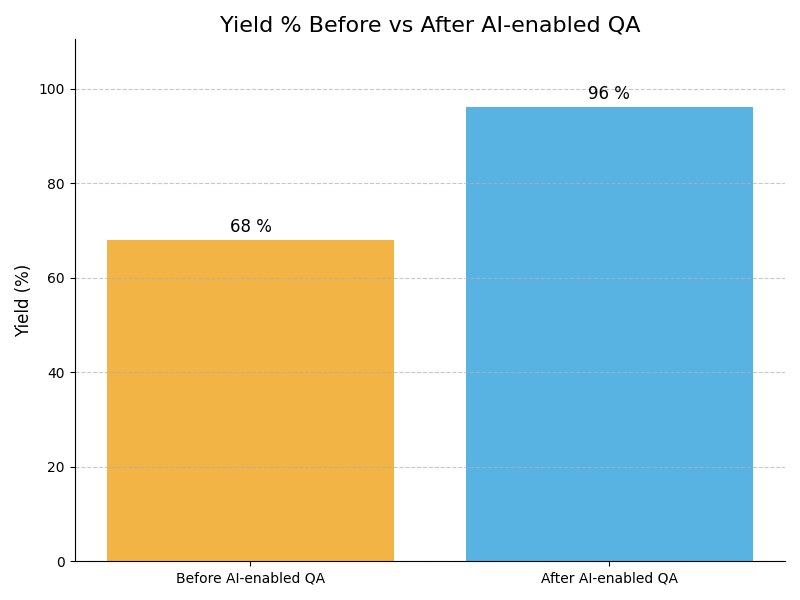
Leadership Challenges & Opportunities
Data Silos in Operations
Utilize AI for Logistics in Automotive Industry to integrate disparate data sources through centralized platforms. Implement machine learning algorithms to analyze real-time data flows, enhancing visibility and decision-making. This approach breaks down silos, promotes collaboration, and drives efficiency across supply chain operations.
Resistance to Automation
Foster a culture of innovation by showcasing AI for Logistics in Automotive Industry successes through pilot projects. Engage employees with transparent communication and training programs that highlight automation benefits. This strategy encourages acceptance, mitigates resistance, and empowers teams to embrace AI-driven changes in logistics processes.
High Initial Investment
Leverage AI for Logistics in Automotive Industry through phased implementation strategies that focus on low-cost, high-impact areas first. Utilize cloud-based solutions with flexible pricing models, allowing gradual investment while demonstrating ROI. This approach minimizes financial risk while enabling strategic resource allocation for future expansion.
Supply Chain Complexity
Apply AI for Logistics in Automotive Industry to streamline complex supply chains through predictive analytics and optimization algorithms. These tools enhance demand forecasting and inventory management, reducing lead times and costs. This data-driven strategy improves responsiveness, aligns supply with demand, and increases overall operational efficiency.
Assess how well your AI initiatives align with your business goals
AI Adoption Graph
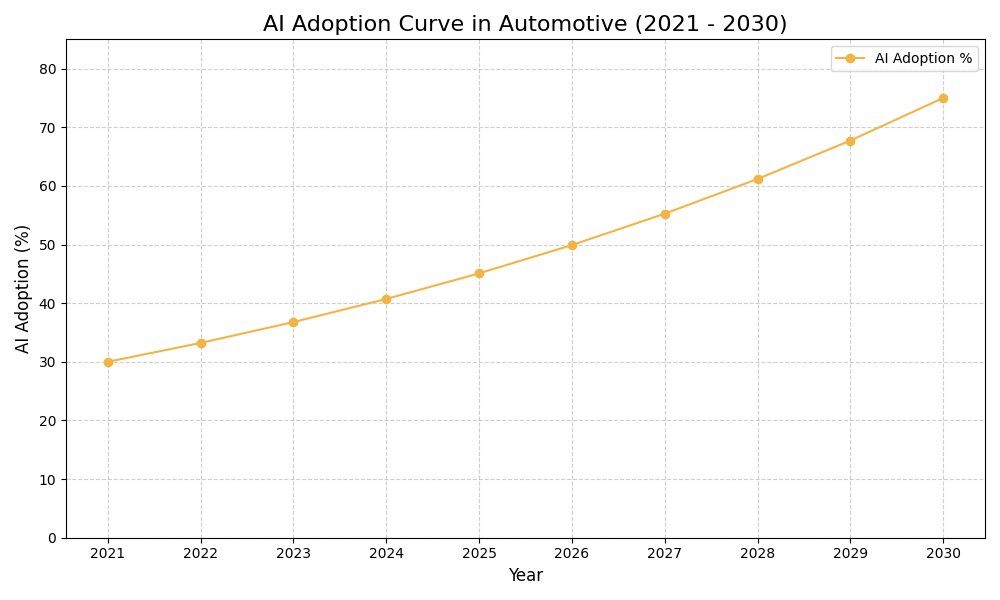
AI Use Case vs ROI Timeline
| AI Use Case | Description | Typical ROI Timeline | Expected ROI Impact |
|---|---|---|---|
| Predictive Maintenance | AI can analyze vehicle sensor data to predict maintenance needs before failures occur. For example, a leading auto manufacturer uses AI to predict when parts will fail, reducing downtime and repair costs significantly. | 6-12 months | High |
| Optimized Route Planning | AI algorithms optimize delivery routes based on traffic, weather, and vehicle capacity. For example, a logistics firm implemented AI to cut delivery times by 15%, improving customer satisfaction and reducing fuel costs. | 3-6 months | Medium-High |
| Inventory Management Automation | AI can forecast demand accurately, ensuring optimal inventory levels. For example, an automotive parts supplier uses AI to match inventory with sales trends, minimizing excess stock and storage costs. | 6-9 months | Medium-High |
| Supply Chain Risk Management | AI tools analyze supply chain data to identify risks and disruptions. For example, a car manufacturer uses AI to monitor supplier performance, allowing them to proactively manage potential delays. | 12-18 months | Medium-High |
Glossary
Work with Atomic Loops to architect your AI implementation roadmap — from PoC to enterprise scale.
Contact NowFrequently Asked Questions
- AI for Logistics enhances supply chain efficiency through automation and intelligent data analysis.
- It minimizes delays and errors by optimizing inventory and transportation management processes.
- Companies can achieve better customer satisfaction through improved delivery accuracy and speed.
- AI supports predictive maintenance, reducing vehicle downtime and operational costs.
- Overall, it drives competitive advantages by enabling data-driven strategic decisions.
- Begin with a comprehensive assessment of current logistics processes and pain points.
- Identify specific use cases where AI can add the most value to your operations.
- Develop a clear roadmap that includes timelines, resources, and key milestones.
- Engage stakeholders to ensure alignment and support throughout the implementation phases.
- Pilot projects can demonstrate value before scaling AI solutions across the organization.
- Resistance to change is a frequent hurdle that can slow down AI adoption efforts.
- Data quality issues can hinder AI effectiveness, necessitating robust data management practices.
- Integration with legacy systems may present technical challenges requiring careful planning.
- Talent shortages in AI and data analytics can impede successful implementation.
- Adopting a phased approach helps mitigate risks and allows for adjustments based on feedback.
- Expect improved operational efficiency through reduced cycle times and resource utilization.
- AI can enhance visibility across the supply chain, leading to better decision-making.
- Companies often see cost reductions related to inventory management and logistics operations.
- Increased accuracy in demand forecasting can lead to optimized inventory levels.
- Overall, measurable ROI can be tracked through enhanced service levels and customer satisfaction.
- Organizations should consider implementing AI when facing significant operational challenges.
- A readiness assessment can determine if current systems can support AI integration.
- Timing can also depend on the competitive landscape and market pressures for innovation.
- It's crucial to ensure leadership buy-in and readiness among teams before starting.
- Continuous monitoring of industry trends can indicate the optimal moment for adoption.
- AI can optimize route planning to minimize fuel costs and delivery times effectively.
- Predictive analytics can enhance maintenance scheduling, reducing vehicle downtime significantly.
- Automated inventory management ensures stock levels are maintained without overstocking.
- AI-driven insights can refine supplier selection and relationship management processes.
- Real-time tracking systems improve transparency and accountability throughout the supply chain.
- Establish baseline metrics for current performance before implementing AI solutions.
- Compare performance metrics post-implementation to assess improvements in efficiency.
- Track cost reductions in areas like labor, inventory, and transportation management.
- Customer satisfaction scores can serve as indicators of AI's impact on service quality.
- Regular reporting on KPIs will help demonstrate overall ROI and areas for further enhancement.
- Start small with pilot projects to test AI applications before broader rollout.
- Engage cross-functional teams to incorporate diverse perspectives and expertise.
- Ensure robust data governance to maintain quality and accessibility of data inputs.
- Invest in training and upskilling employees to leverage AI technologies effectively.
- Continuously review and refine AI strategies based on performance and feedback from users.